From installation to first results
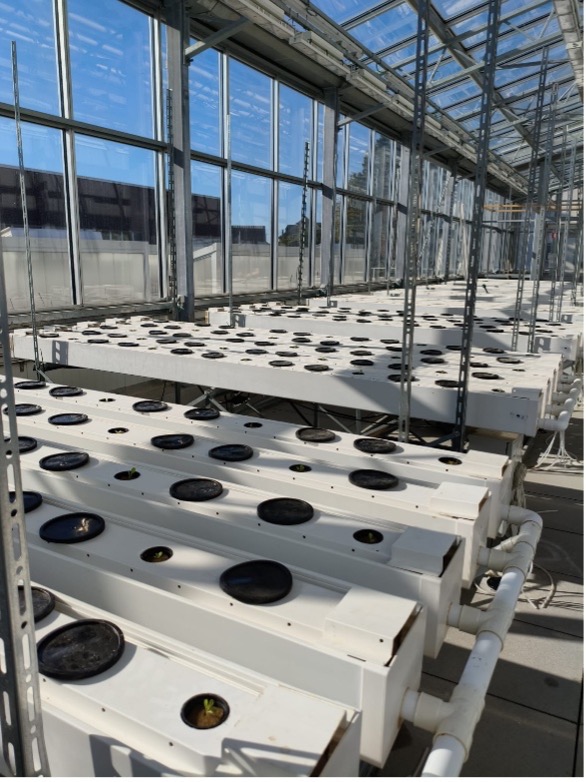
As part of the Interreg North-West Europe BIOBOOST-Pro project, the University of Liège (Gembloux Agro-Bio Tech) has developed a pilot system to transform animal residues into liquid fertilisers for soilless cultivation.
Following our previous article introducing the pilot system, the focus has now shifted towards evaluating its performance. During summer 2026, successive production batches were carried out using poultry manure to investigate nutrient recovery and identify the main opportunities for process optimisation.
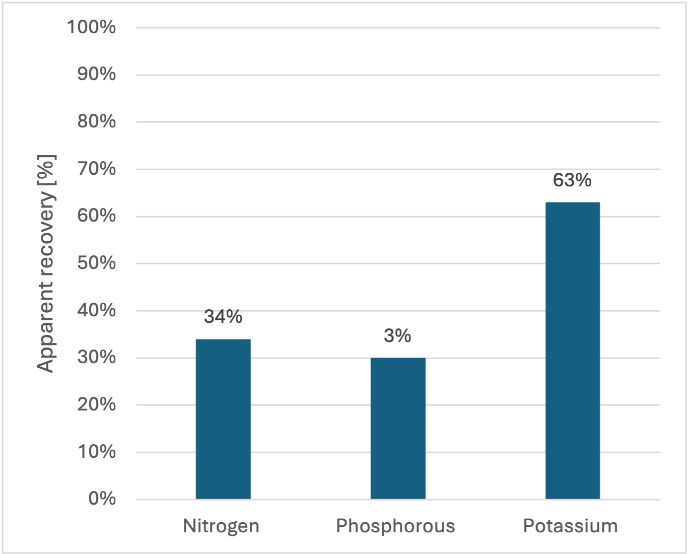
The first results show that nitrogen (N), phosphorus (P) and potassium (K) behave very differently throughout the treatment process.
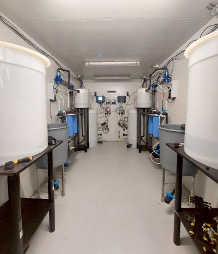
Figure 1 - Photograph of the operational ULiège pilot site.
Three nutrients, three different recovery performances
The trials compared the estimated nutrient inputs with the quantities recovered in the filtered liquid after digestion and solid–liquid separation.
1. Potassium (K): promising recovery
Potassium showed the highest apparent recovery, with approximately 63% recovered in the filtered liquid digestate.These results suggest that potassium is relatively easily transferred from poultry manure into the liquid fertiliser, making it one of the most promising nutrients recovered through the process.
2. Phosphorus (P): the main recovery challenge
Phosphorus showed a very different behaviour, with only around 3% recovered in the liquid digestate. Around 50% of the phosphorus appears to remain associated with solid particles, which are separated from the liquid during settling and filtration. This considerably limits its availability in the final fertiliser.
Improving phosphorus solubilisation has therefore become one of the main priorities for the pilot system. Potential strategies include the use of phosphorus-solubilising microorganisms and pH adjustments to encourage phosphorus transfer into the liquid fraction.
3. Nitrogen (N): from ammonium recovery to nitrification
Approximately 34% of the total estimated nitrogen input was recovered in the filtered digestate, mainly in the form of ammonium. This demonstrates the ability of aerobic digestion to convert organic nitrogen from poultry manure into a mineral form.
However, recovering nitrogen as ammonium is only the first step. To obtain a fertiliser better suited for hydroponic cultivation, this ammonium-rich digestate undergoes a second biological treatment: nitrification, during which nitrifying bacteria convert ammonium into nitrate.
These preliminary recovery results do not yet establish how well the resulting fertiliser supports plant growth.
Nitrification reaches a first milestone
Although establishing a stable nitrifying bacterial community initially required time and several adjustments, the process is now operating successfully. The team has already achieved a nitrate-rich digestate containing 650 mg/L of nitrate nitrogen (N–NO₃), marking a major milestone for the pilot system. Nitrate concentrations continue to increase day by day thanks to a continuous nitrification process, in which ammonium-rich digestate is progressively supplied through a drip-feeding system. The optimal feeding rate is still being investigated to improve production efficiency while maintaining stable nitrification.
Balancing pH without adding too much potassium
One challenge nevertheless remains: nitrification naturally causes acidification, requiring regular addition of a base to maintain a suitable pH. The current use of potassium hydroxide (KOH) leads to excessive potassium accumulation, creating an imbalance in the final fertiliser composition. Optimising the feeding rate and finding an alternative pH regulation strategy are therefore important next steps.
What comes next?
These first production trials represent an important milestone for the Bioboost-Pro project. They demonstrate the potential of poultry manure as a source of nutrients for hydroponic fertilisers while identifying the main limitations of the current process.
The next development phase will focus on improving phosphorus recovery, optimising pH regulation during nitrification and achieving a more balanced final nutrient composition.
The resulting fertiliser will then be evaluated through hydroponic lettuce cultivation trials to assess its ability to support plant growth compared with a conventional mineral fertiliser and commercial bioponic fertilisers.
By combining nutrient recovery with on-site crop production, the ULiège pilot system aims to contribute to more circular and resource-efficient fertilisation strategies for soilless agriculture.
Figure 3 - Next steps for the ULiège pilot: process optimisation, fertiliser formulation and hydroponic lettuce trials.